| 👉 In partnership with Campaign Monitor 
Campaign Monitor is a cloud-based email marketing platform designed to help businesses create, send, and optimize professional email campaigns. It offers intuitive drag-and-drop design tools, audience segmentation, and detailed analytics to help marketers build stronger connections with their subscribers. Campaign Monitor's AI-driven capabilities have further enhanced its effectiveness in modern marketing. Through the use of artificial intelligence and machine learning, the platform helps businesses send more personalized and timely messages, improving engagement and conversion rates. AI is deeply integrated into Campaign Monitor's automation, optimization, and reporting systems, allowing marketers to make smarter, data-backed decisions about their email strategies. - Smart Email Automation: Uses AI to send emails at optimal times with personalized content for higher engagement.
- AI-Enhanced Reporting and Insights: Uses AI to analyze performance, identify trends, and recommend improvements for optimized marketing results.
| | 📰 OpenAI Upgrades Codex Into a Collaborative AI Tool 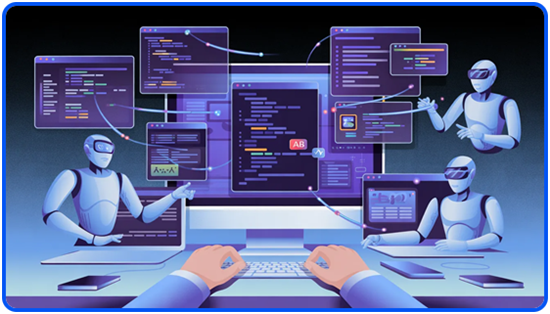
Brief Buzz: OpenAI just supercharged Codex with a dedicated macOS app, transforming it from a coding assistant into a full AI agent management hub. The new interface focuses on parallel workflows, automation, and deeper customization - signaling a shift toward team-style AI development. - New macOS Codex app with a ChatGPT-like, code-optimized interface
- Run multiple agents in parallel, organized by project threads
- Built-in worktrees let agents edit the same repo safely
- Launch of Agent Skills and scheduled Automations
- Expanded access, including Free and Go users (limited time)
Why Should You Care?
This isn't just faster coding - it's a glimpse of how work may evolve. Developers (and eventually non-coders) can delegate tasks to AI teams, automate grunt work, and focus on higher-level thinking. If AI agents become standard collaborators, productivity - and how teams operate - could change dramatically. | | ⚡️ 5 AI Tools to Supercharge Your Productivity 👉 Human Interest - The platform uses AI-driven compliance intelligence to continuously monitor regulatory requirements, automatically flag anomalies, and reduce the administrative burden associated with plan oversight. 👉 ActivTrak - AI-powered workforce-analytics engine auto-classifies every app & website activity to reveal focus vs distraction trends and productivity baselines. Predictive coaching dashboards surface "nudges" for managers, using ML to flag at-risk teams and recommend schedule or workload tweaks. 👉 RemotePC is a remote access solution that allows users to connect and control computers from any location. Its AI-driven features include automatic session optimization, providing seamless performance by adjusting to network conditions. 👉 SlickText - An SMS marketing tool with AI Compose built into campaigns, workflows, and auto-responses that generates editable message drafts from simple prompts, plus AI-enabled customer segmentation and opt-out intelligence to personalize messaging at scale. 👉 SBG Funding - Although primarily a small-business lender, SBG Funding publishes guidance on how its clients are using AI and ML tools for growth — and by extension SBG helps finance adoption of such AI-driven tech. | | 🚀 Inside xAI's Shake-Up: Another Co-Founder Makes a Bold Exit 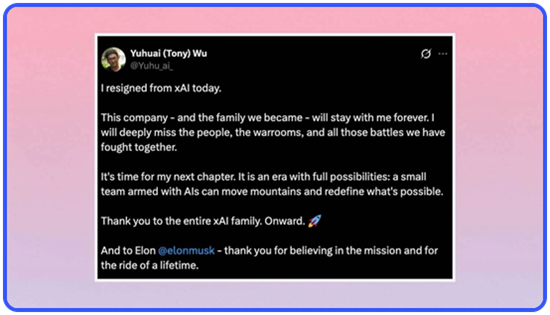
Brief Buzz: Two more xAI co-founders — Tony Wu and Jimmy Ba — have exited Elon Musk's AI startup, marking the fourth and fifth founding departures. The news lands just as xAI pushes forward with its ambitious SpaceX mega-merger and races to ship new Grok models. - Tony Wu, who led Grok's reasoning systems, announced it was "time for my next chapter" - read Wu's departure statement on X.
- Jimmy Ba also stepped down, calling 2026 a "consequential year for the future of our species" - view Ba's announcement on X.
- Departures follow reports Musk is frustrated by delays to upcoming Grok releases, including the expected 4.20 update.
- The exits come during xAI's push toward space-based data centers via its SpaceX integration - explore details of the SpaceX–xAI mega-merger.
- Five founding exits now raise leadership stability questions at a critical growth moment.
Why Should You Care?
Leadership shakeups can slow product rollouts and reshape priorities. With xAI competing against top AI labs, delays or strategy shifts could affect AI innovation speed, safety decisions, and model capabilities - especially as Musk ties AI to space infrastructure. | | 🧠 Inside Sam Altman's $500B AI Gambit - What's Really at Stake? 
Brief Buzz: In a sweeping Forbes profile on Sam Altman, the OpenAI CEO lays out a bold vision: scale AI fast, spend trillions if needed, and eventually hand the company to an AI system itself. The stakes? Nothing less than reshaping the global economy. - ChatGPT now has 800M+ weekly users, with OpenAI generating $13B in revenue and valued at $500B, potentially rising to $750B.
- Altman claims OpenAI is "very close to AGI," though Microsoft CEO Satya Nadella pushes back, calling it premature.
- OpenAI is expanding aggressively: custom AI chips, humanoid robots, healthcare tools, social media, and a $500B U.S. AI infrastructure push (Project Stargate).
- Internal tensions persist - boardroom drama, safety lawsuits, rivalries with Anthropic and Elon Musk's xAI.
- Altman's long-term succession plan is radical: once artificial intelligence reaches true autonomy, he would hand control of OpenAI to an AI system itself. If AI can run companies better than humans, he argues, his own company should be the first test case.
Why Should You Care?
OpenAI is no longer just a chatbot company - it is becoming critical infrastructure. From energy grids to healthcare tools to creative media via Sora and Disney partnerships, Altman is betting that AI will automate innovation itself. If he is right, AI could reshape jobs, economies, and daily life faster than most expect. If he is wrong - or moves too fast - the risks scale just as quickly. | | 🚀 Apple Supercharges App Building With AI-Powered Xcode 
Brief Buzz: Apple just gave its developer hub a serious AI boost. Xcode 26.3 now integrates agentic coding assistants from OpenAI and Anthropic, embedding AI deeper into the app development workflow - from writing code to visually checking finished interfaces. Learn more in Apple's official announcement: - Agentic AI integration: Powered by OpenAI Codex and Anthropic Claude Agent, assistants can search docs, adjust settings, and navigate files collaboratively.
- Visual code verification: New "Preview Screenshot" tool lets AI analyze app UI visually to confirm design elements (like Apple's liquid glass effect).
- Lifecycle support: Agents assist across development - not just coding, but testing and configuration.
- Model Context Protocol support: Enables connection to external AI tools and data systems for flexible workflows.
- Strategic shift: Apple is leaning on best-in-market AI models instead of building everything in-house.
Why Should You Care?
If you use apps, this matters. Faster AI-assisted development means better features, fewer bugs, and quicker updates. For developers, it lowers barriers - potentially accelerating innovation across the Apple ecosystem you rely on daily. | | 📊 How to Build Powerful Simulations Step-by-Step with Gemini 3 
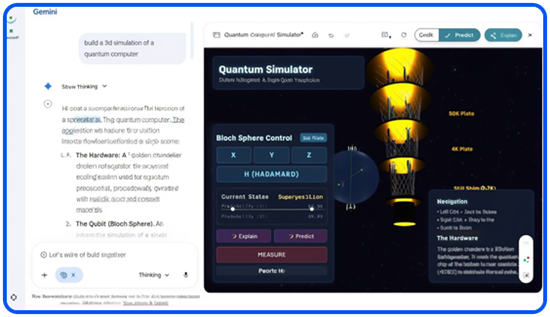
In this tutorial, you'll learn how to use Gemini 3 to create interactive simulations, educational visualizations, and fully functional tools in a single workflow—leveraging its benchmark-shattering capabilities for visual learning and rapid prototyping. Step-by-step: 1. Go to the Gemini homepage and select "Gemini 3 Pro" for reasoning, or "DeepThink" for advanced performance (confirm availability in your region). 2. Enter your prompt in the chat box - for example: "Build a 3D simulation of a quantum computer". 3. Review the immersive simulation output and click "Explain" to activate the AI tutor for summarized learning. You can then view or share the code. 4. Experiment with different projects such as games, content schedulers, or data dashboards. If the simulation is not functional or visually appealing, refine your prompt and try again. 💡 Pro Tip: When aiming for high-quality simulations, start with Gemini 3 Pro for clearer visual logic, then iterate prompts by adding constraints (e.g., interactivity, real-time data, UI controls). This layered prompting approach significantly improves both functionality and visual depth. | | 📸 AI Generator Images: Games 
| |
|